How To Perform React Migration? Strategy and Tips to Follow
ebridge
Feb 17, 2023 · 10 min read

Making the decision to switch your app or website to a different technology sounds difficult. You can't afford to shut it down for a time or run the danger of making a mess, so doubts are understandable. However, if react migration is your preferred choice, the transfer is significantly simplified.
It is possible to move to React gradually. With React, new features can be released quickly, allowing developers to concentrate entirely on the JavaScript portion without having to worry too much about the server templating system.
Reasons for Choosing React.js
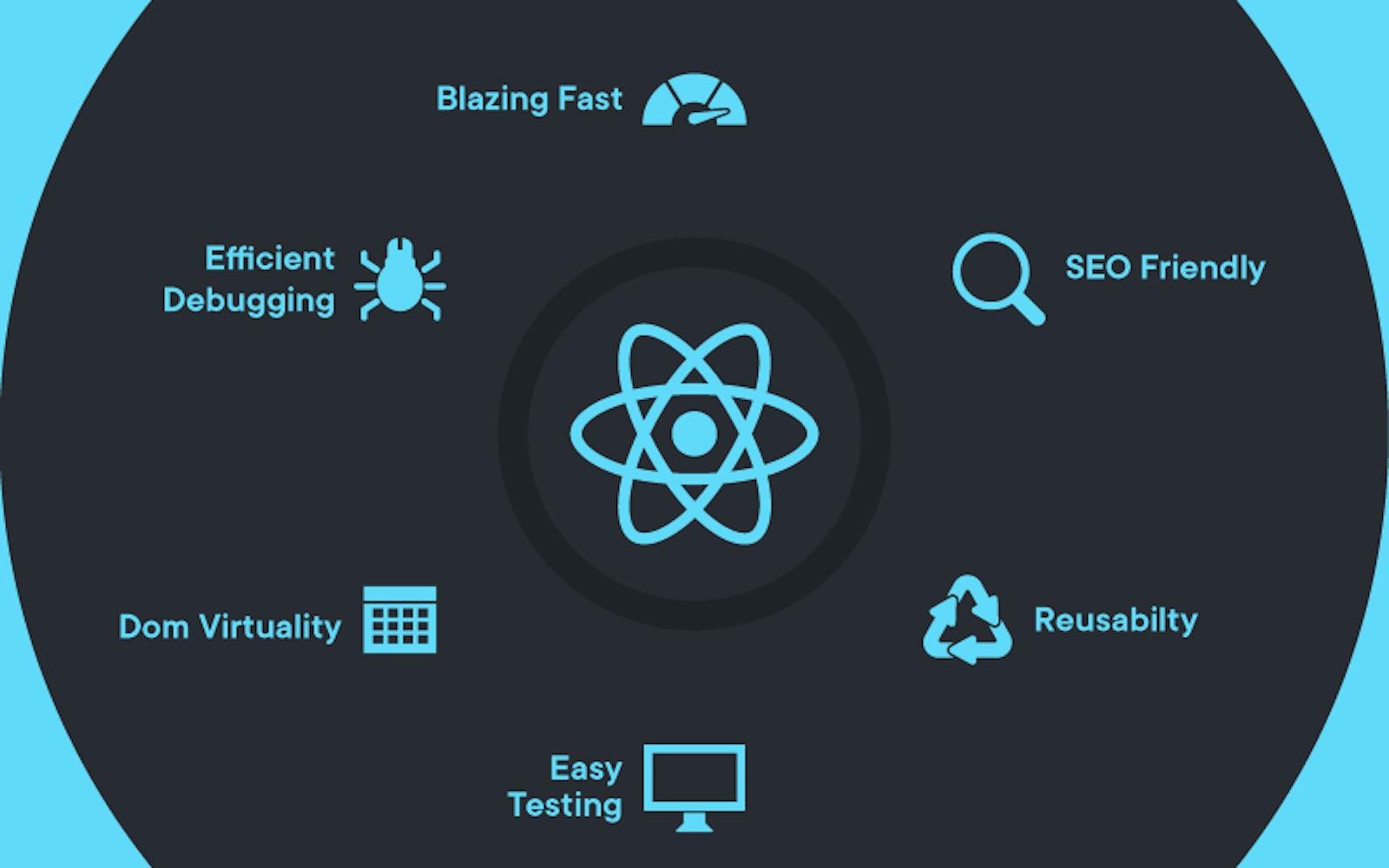
- Open source: We adore React.js because we are open-source fanboys. The majority of the development projects for our clients have utilized it.
- Stable community: With a strong React ecosystem, it was simpler for our developers to address the majority of the migration-related problems.
- Speed: React loads pages incredibly quickly compared to other JS frameworks and libraries. We were able to improve the responsiveness of our website.
- Feature bloat, technical debt, and reliance on hard-to-maintain libraries and frameworks drive up the cost and duration of adding new features and performing maintenance for their program.
- Regression problems are more likely to emerge in this situation. Naturally, this has an impact on the business's potential to generate new income (new features equal new market value) and negatively on its financial position (wasted time equals wasted money).
- When the app creators left their company, a considerable loss of expertise resulted from the loss of their domain knowledge. Never should you be in this predicament.
Migrating A Web Application Frontend to React.js: Steps to Follow
It is simple to make interactive UIs with React because it is declarative. You can successfully update and automatically render the necessary web app components.
- Prepare for migration: Most React Migration failures are the result of poor planning and execution. But in practice, it takes a very different tack. The following list of crucial topics for discussion during the planning stage:
- Examining the dangers and negative effects of migration
- Recognizing security concerns
- Elimination of pointless categories, plugins, and APIs
- Colleague and stakeholder feedback analysis
- Template-related errors
- Before a Migration, Analyze the Web Application: An essential stage that should be completed before the react migration is the analysis of the online application. This pre-migration strategy should resemble an exam that must be taken before migration, with the important items being prioritized and the remainder being disregarded. The following list of crucial issues needs to be discussed with your React.js migration specialists:
- Distancing the DOM transition between React and the current platform.
- Make sure that during the migration, search engine crawlers do not access the web app.
- Completely block all access from unneeded IPs.
- Data backups of plugins, internal links, URL parameters, and page indexing information.
- Process of Deploying After Migration Work: The deployment of the web app comes once the React migration has been properly completed. Use the elements incorporating ReactDOM if you wish to reduce the additional bytes while maintaining optimal speed. Implement the element renderToString in hydrate() on both the client and server sides.Here are some suggestions for simplifying this challenging task:
- Sitemaps in XML
- Canonical tags
- Web page redirection
- Testing of server responses.
- Get rid of redundant stuff.
- Post React Migration Report and Analysis: After the react migration, all error reports should be removed as quickly as possible. Since a mistake at this step could harm your web apps' traffic and performance. After the react migration procedure, what should you check for? The following are the check-list items for the post-React migration:
- Crawler statistics
- Server logs
- Crawl errors
- And statistics for both the old and the react versions.
Tips for Successful React Migration.
To improve your web application's performance, follow these handy tips:
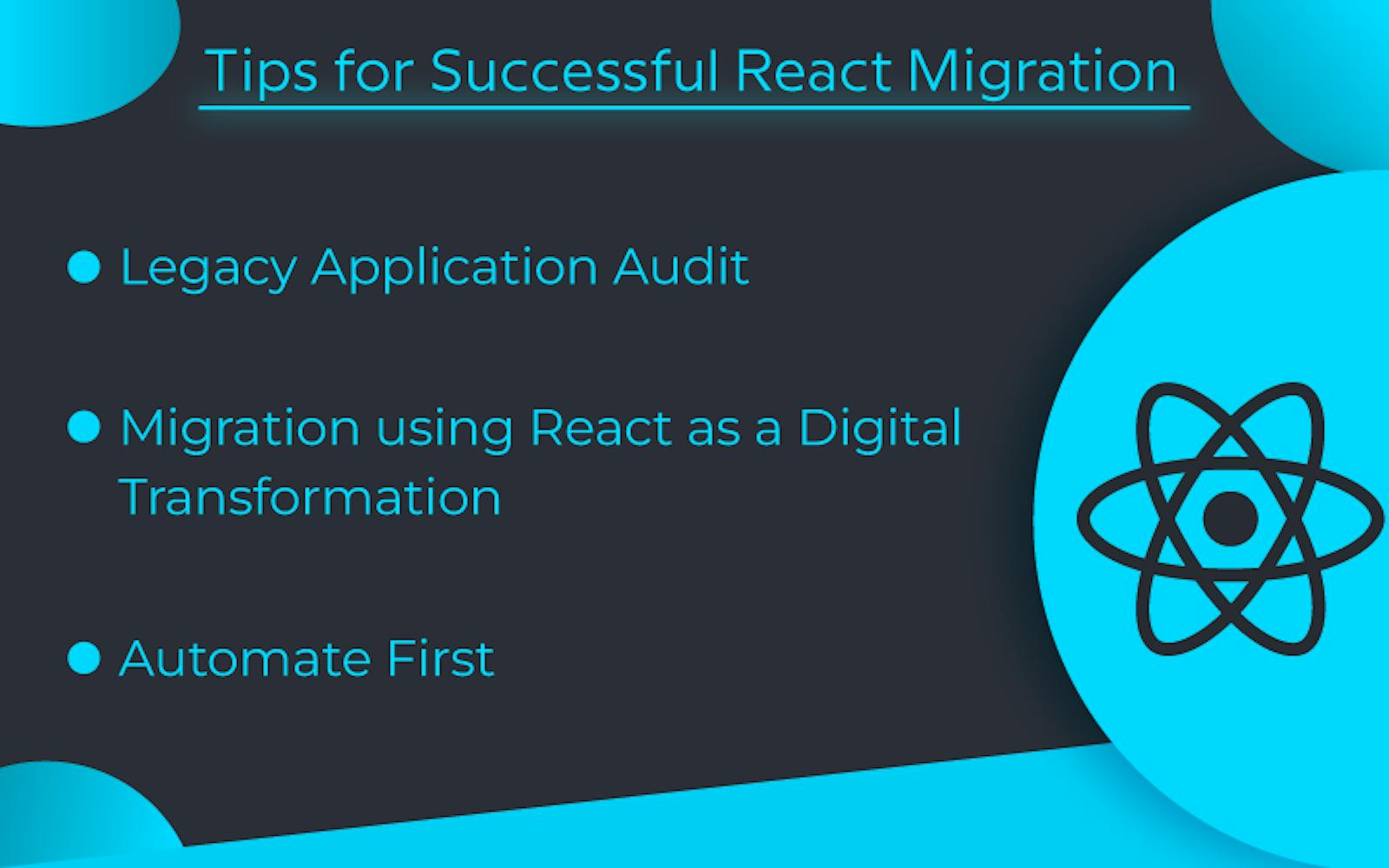
Perform a Legacy Application Audit:
A thorough evaluation will assist in identifying the causes of any current pain locations. It will also aid in defining specific objectives for this modernization journey.
Third-party technical evaluations can be quite beneficial because they can reveal unknowns previously and develop hypotheses about your legacy stack that aid in uncovering information buried deep inside the underlying architectures.
Treat Migration Using React as a Digital Transformation:
It's a chance to enhance more than just the front end. One of our clients made the decision to switch from outdated backend APIs designed for POS systems in their retail outlets to React. Before we converted some of the APIs to microservices, certain of the business objectives were impractical to achieve.
Automate First:
Before developing a single line of code, performance budgets, accessibility guidelines, coding standards, and formatting can all be automated. Lint and auto-formatting checks are excellent choices for staged files in the pre-commit stage.
The ideal way to implement the others is in a Continuous Integration setting. The ecosystem for React developers is brimming with fantastic frameworks and goods.
Migrating To React Without Jeopardizing Your Existing SEO.
People frequently worry about the SEO rating of apps that heavily rely on front-end programming.
In these circumstances, SSR is used. When JavaScript has finished being parsed, it first renders React code on the server, provides it to the user, and then reuses it. You should be aware that some of your APIs will need to be server-side mocked.

Because the server is unaware of the end user's screen height, you will need to mock the height of the area the user can see, for instance, if you use virtualized lists to render only the elements visible on the screen (to prevent the user's device from using excessive resources without a reason).
In order for the initial paint to have information that search engines can then read, the height needs to be artificially set on the server. Fortunately, everything returns to normal once React finishes loading and reuses the pre-rendered template.
Final Words
The idea of React migration is not new. Many businesses and organizations employ the React Migration method to get over the difficulties brought on by using previous frontend frameworks.
The React framework and frontend language are used by more than half of all websites on the internet. If the proper migration strategies and react migration best practices are used, react migration can be completed rapidly.