How To Start a Blog and Earn Online (Up To $200K Monthly)
ebridge
Dec 5, 2022 · 22 min read

You've come to the right site if you're wondering how to start a blog. It's a fruitful method to develop your writing abilities, discover novel concepts, and create an online identity centred around your interests and areas of expertise.
You'll have the chance to motivate, inform, and amuse your readers; as your blog gains popularity, you may even start to earn money and make it your full-time profession. So, you really can't go wrong as blogging is the first step toward eventually achieving your desired career or favourite activity.

Even though beginning a blog may seem difficult, this guide will help you through each step to help it run as smoothly as possible. The procedure is actually fairly simple, and before you know it, your blog will be live. You'll find all the advice and resources you need to create a blog in this step-by-step manual. You'll discover how to launch your website, create your first blog post, and entice repeat visitors. Sounds intriguing? Let's start now.
Step By Step Guide to Start a Blog and Earn Money.
1. First, Recognize Who your Audience is:
Make sure you have a firm grasp of your target audience before you begin writing your blog post. Find out what people want to know by asking them questions like What will ring true for them? The practice of developing buyer personas is useful in this situation. While choosing a topic for your blog post, take into account what you know about your customer personas and their interests.

For instance, if your readers are millennials seeking to launch a business, you probably don't need to give them advice on how to begin using social media because the majority of them already know how to do so. However, you might want to provide them with advice on how to change their social media strategy (for instance, from a possible casual, personal strategy to a more business-savvy, networking-focused strategy).
You can produce material about the subjects your audience actually needs and wants with the help of that kind of tweak.
2. Choose A Niche for Your Blog:
There are countless topics to blog about, including marketing, food, Crossfit, vegan dog sitting, underwater parkour solo dance, and other wacky personal topics. Well, starting with a topic that you are enthusiastic about can help you "keep a steady writing schedule and push through failure to achieve," according to the majority of professional bloggers.
You are the brand if you are a blogger. The concept of the Authority Flywheel will help you:
It is divided into four sections, beginning with "You," because your life is your specialization and you are its primary focus. Finding your area of expertise is the next step. Not what you consider to be your area of expertise or where you aspire to become an expert, but rather what you have a history of success in. You can make money with a new blog as a beginner because of your experience.
3. Choose a Blog Name:
If you're unsure of the name or subject of your blog, move on to the next phase. If you already have a name in mind for your blog, you may be sure that no one else has previously registered it by checking: It should be noted that dashes are the only permitted form of punctuation in domain names.
There are a Few Options You have if the Name You Desired is Already Taken:
• Examine various domain extensions. You might still be able to register the.net or.org variant of the domain if the.com version has already been taken.
• Include brief words. words such as "a," "may," "best," or "the."
• Place a dash between each word, john-chow.com, as an illustration
4. Launching of Your Blog:
It's time to launch your blog now that you've chosen a name. The steps listed below will guide you through and make the procedure simple even though it can seem difficult or complicated.
Blog hosting, also known as web hosting, and blogging software are required to get your blog up and operating. The good news is that these are frequently sold in sets. A blog host is a business that stores all of the blog's files and makes them available to users when they key in the blog's name. A blog host is necessary in order to have one.
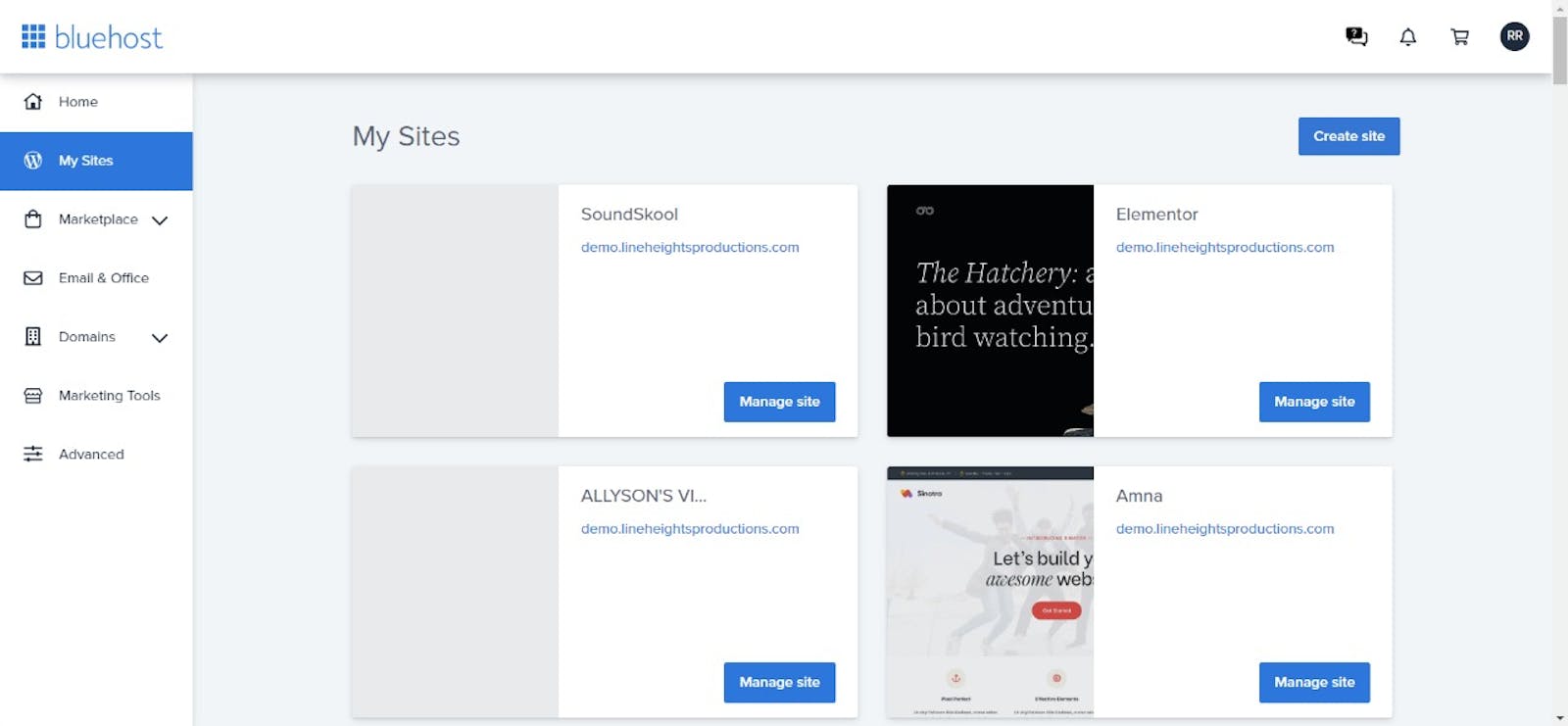
Tips: Bluehost makes it simple to establish a blog by installing WordPress for you with just one click from your hosting or control panel.
5. Create and Customize Your Blog.
• Pick a blog template, first.
• Select the pages you want to use.
• Obtain search engine indexing.
• Design a blog's logo.
You've now selected a blogging platform, a hosting service, a domain name, and a blog niche. You now possess all the necessary knowledge to set up your blog.
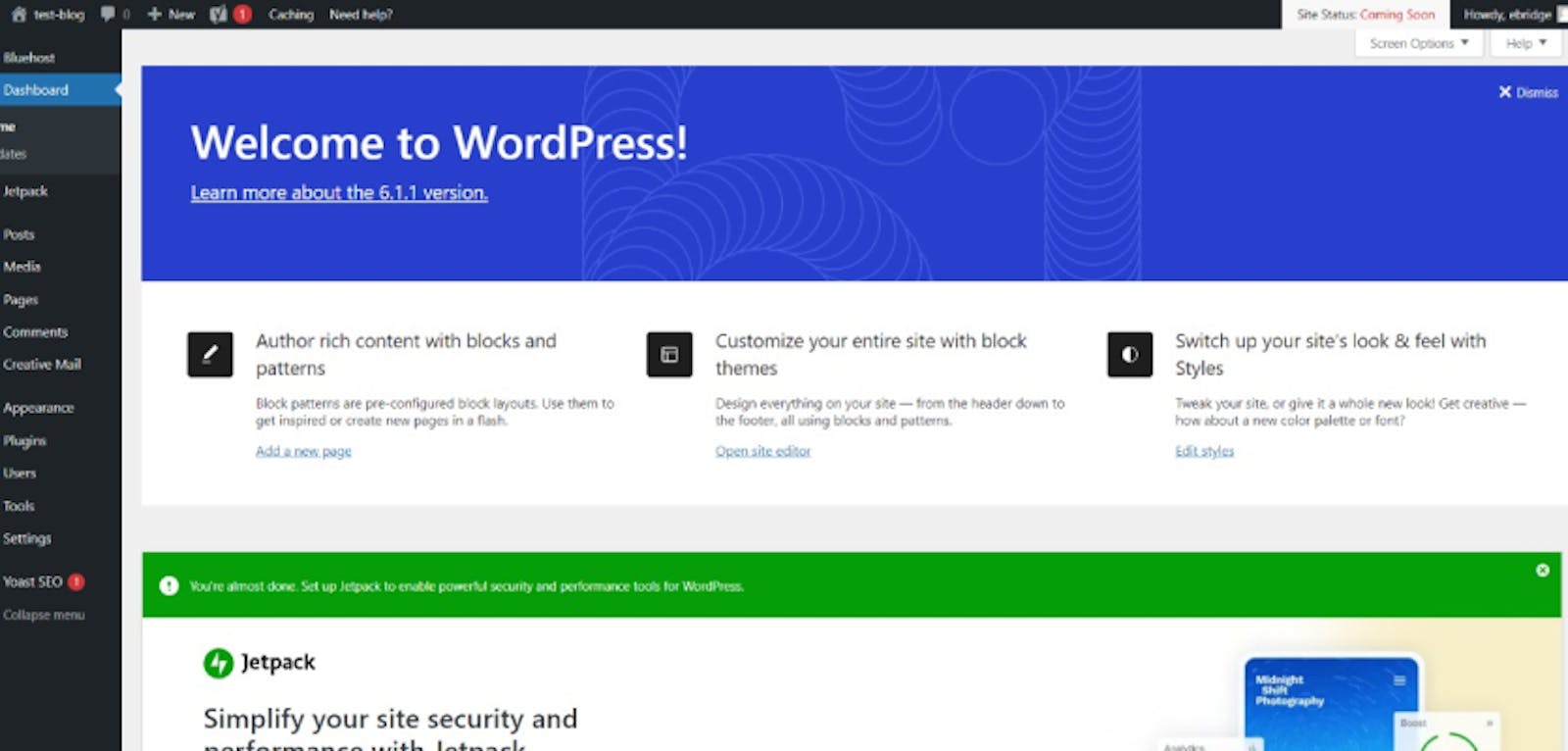
After being forwarded to a new blog page, you must select "Start Building" from the menu. Next, choose the kind of blog site you want to build; WordPress will guide you through the process with prompts. You can also go directly to your dashboard by clicking "I don't need help."
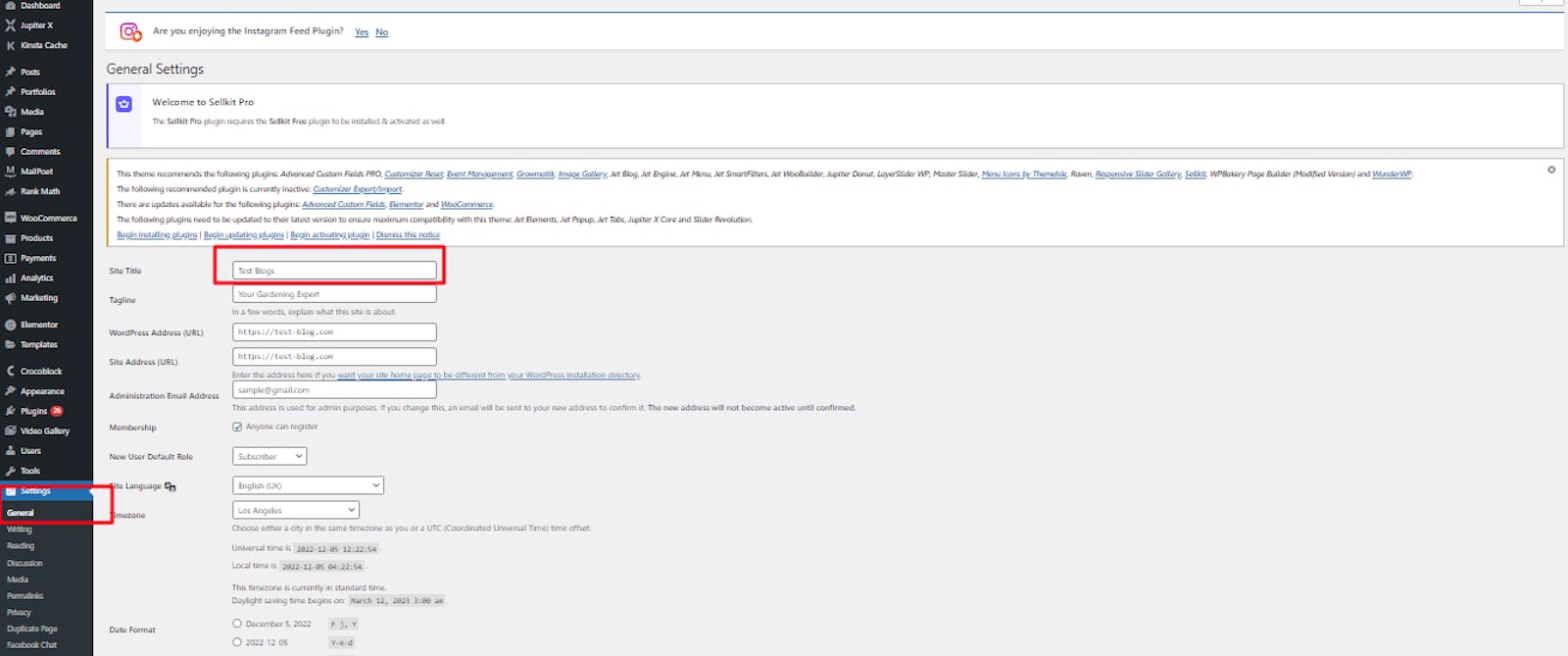
Enter your "Site Title" and "Site Description" at the end. Spend some time getting acquainted with the WordPress dashboard after this.
6. For Your WordPress Blog, Choose A Theme
A WordPress theme is a set of stylesheets, scripts, and templates that determine how your blog will look. You have the option of using a paid theme or a free theme with fewer customization possibilities.
To install a new theme on your WordPress blog, follow these steps:
• Log in to your WordPress account first (admin page).
• You can always go to your domainname.com/wp-admin to see your WordPress login page.
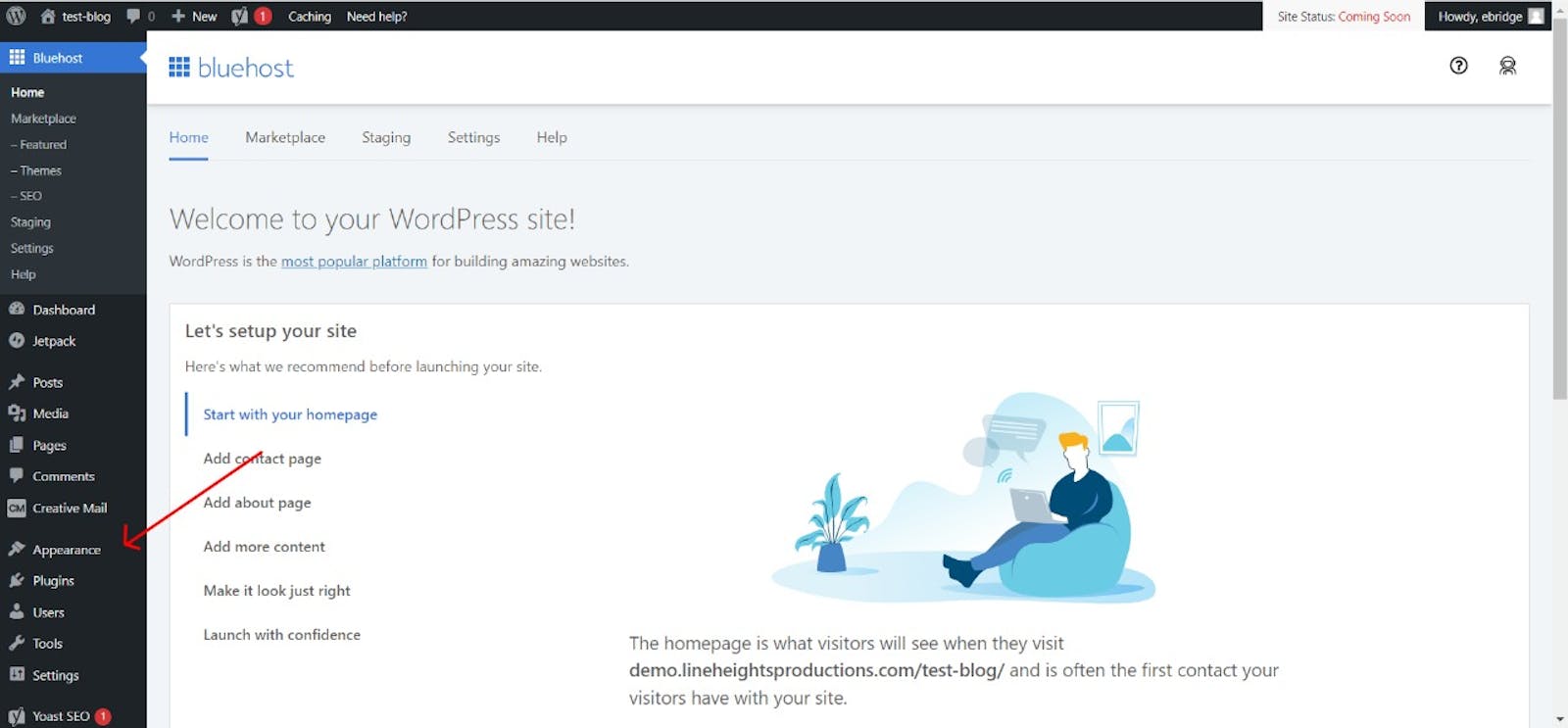
• Go to "Appearance" - "Themes" and select "Add New," upload the zip file, then click install to install an external theme from any website.
7. Plugins and Customizations
After publishing your first blog entry, you'll undoubtedly want to start adding other common website components like a contact page, galleries, sliders, an email list, forums, etc.
You must utilize plugins to add all of these extra functions. WordPress plugins are programs that let you expand the functionality of your website (without writing any code).
In the free WordPress plugin directory alone, there are more than 59,000 plugins available. This implies that there is a plugin for anything you wish to do.
Some Popular Plugins are:
Elementor Pro
You can use the WordPress landing page builder Elementor Pro to make the home page and about page. Elementor has a free version, but the Pro version elevates it with significantly improved templates.
ShortPixel Image Optimizer
All of your screenshots and photos are compressed by ShortPixel to make them smaller files and speed up page loading.
ShortPixel has shown to be the most effective of all the image compression technologies I've examined.
Yoast SEO
My sitemap, robots.txt, page title, and meta descriptions are all managed by Yoast SEO.
8. Creating blog posts that are relevant to search intent
Consider what your reader genuinely wants when they conduct an online search for your target keyword while you are developing your content strategy.
By comprehending the reasoning behind the search, you can match search intent and give your readers the answer they are actually seeking.
This is done by reverse-engineering the search and examining the additional terms that are present in the title tags of the content that is currently ranking.
Even though you don't need to be a skilled writer to start a blog, it's crucial to comprehend fundamental sentence structure and correct grammar.
9. Obtain A Listing on Search Engines
Making sure a blog is visible on Google and other search engines is another aspect of launching one. This stage needs to be taken care of right immediately if you want your content to appear in search results because it is so important.
First, check that Google has indexed your website. In essence, this entails alerting Google to the existence of your blog. By submitting your sitemap to Google Search Console, you can accomplish this.
Pro tip
Throughout your blogging career, you'll use Google Search Console as a vital platform in addition to being crucial for indexing your website.
It provides you with crucial information about the site visitors and clicks on your blog, which you can utilize to enhance your content.
10. Produce Outstanding Content for Your Blog
You have a blog set up and are prepared to post your first blog entry. Where the rubber hits the road is here.
First things first: Blogging is no longer only about posting updates and building an audience. These days, Google drives the websites, therefore organic search traffic is necessary.
Focus on one primary goal term while writing your initial blog article and everyone that follows. It should be used in the following places:
• Make sure the term appears inside your headings.
• Make sure the term appears in the post's title.
• Include your keyword in the opening or closing paragraphs.
• Include the term in the permanent URL of your blog.
• Adjust the term all over your blog article.
11. Blog’s Content Plan
In order for users to comprehend your blog and access key information quickly, you should have a few pages in your blog's top menu navigation before you start writing.
Homepage
The homepage of your website is the primary URL, as is common knowledge. This page's goal is to sell your site's distinctive value proposition in two seconds or less, thus it shouldn't contain every little aspect of it.
A visitor to your home page who is confused about what your website is about may leave and never come back.
About page
Your blog's About Page has to include information about your identity, your values, and the topic of your blog.
Don't be shy in this section; it will help you establish a closer connection with your audience. Not everyone wants to read about all of your most recent career successes.
Instead of boasting about yourself, let people get to know who you really are.
Contact Page
People can contact you if they need to by using a page with a contact form. Make sure you receive a confirmation message when a form is submitted. It can be as easy as:
I really appreciate you reaching out. We'll respond to you as soon as we can.
Analyzing Your Content
To evaluate the effectiveness of your material, employ analytics tools. Ahrefs and Google Analytics are two effective tools for this.
Your blog should already have a Google Analytics account, so you can access it to view metrics like site visitors, average time on page, total page views, and a ton of other fascinating statistics.
The greatest SEO tool for monitoring the ranks and inbound links for your blog posts is Ahrefs. You can see which websites are connecting to you, the phrases you're ranking for, and more.
12. Publish Your First Blog
The content is all that is required after your blog is set up. The content is what will lure your readers in and keep them coming back, even though the style and layout are entertaining and functionally vital.
So, how exactly do you go about creating one of these interesting and educational pieces?
13. Promoting Your Blog
With guest blogging
Guest blogging is a fantastic method to network with other bloggers, gain exposure on a variety of forums pertaining to your niche, and acquire backlinks.
Building relationships and sending cold emails are also part of this hustle.
First, don't consider the advantages that backlinks will provide for you.
You need to add value for other people. When creating guest blog posts for websites devoted to internet marketing, you must add value.
With link building
There are several additional ways to obtain links to your blog besides guest posting.
First, passively acquiring links without outreach or participation is the best method of link-building.
Links to the best material are organically made by people. How then can you guarantee that your blog postings are "linkable"?
When creating a blog, your content must be original and of the highest calibre. The basic entry fee to the game is that amount.
Improve it by including visual components in your blog posts. These can be videos, case studies, infographics, statistics, or any other original content that isn't already available online.
12. Search Engine and Blogging
When starting a blog, keep in mind that while creating content that readers will enjoy is great, you should also make sure that search engines can find your blog.
The key to getting high rankings is as simple as making sure Google understands exactly what each page of your blog is focused on.
SEO title tags
This shows up in search engine outcomes and encourages visitors to click on your blog.
It can be the same as the title of one of your articles, different from it, or similar to it, but most importantly, it must make sense when users type in certain words.
Additionally, you should keep in mind that search engines will shorten the title tag to roughly 160 characters when coming up with an SEO title.
Meta description
A meta description is yet another aspect of on-page SEO to take into account. These are the words that are displayed in Google beneath your blog post.
You have the ultimate influence over what Google believes your post is about because they are displayed on your page. Give readers a clear notion of what to anticipate from your blog using these.
Sitemap
This not only informs search engines about all the pages you have but also helps them route search engine bots to your blog.
To guarantee that new content posted to your blog is indexed as soon as possible, you should submit a sitemap via Google Search Console.
Widgets
Displaying information in a widget in addition to your post might help you have a fantastic site for SEO purposes.
This means that providing author bios, related topics, and RSS feeds in your blog entries will aid in directing relevant viewers to your website.
On-page SEO
To rank on search engines, your blog content must be formatted correctly. To achieve this, you must make sure your target keywords are included throughout the content, in the URL, in the H1 (title), and in the first H2 (which should be framed as a question).
Earning From Your Blog
After setting up your own blog and personalizing it to your tastes, you may be wondering, "How can I actually make money blogging?"
There are many various effective strategies to monetize your site. However, a get-rich-quick technique does not exist.
The images of luxurious automobiles and mansions are all phoney, so don't be duped by them.
There are many ways to monetize your WordPress blog, in contrast to other "make money online". Everyone who wants to monetize their site should follow these strategies:
• Google AdSense
• Affiliate Marketing
• Online Store
You will be rewarded if you are willing to work hard and put forth the effort. Keep in mind that there are no shortcuts.