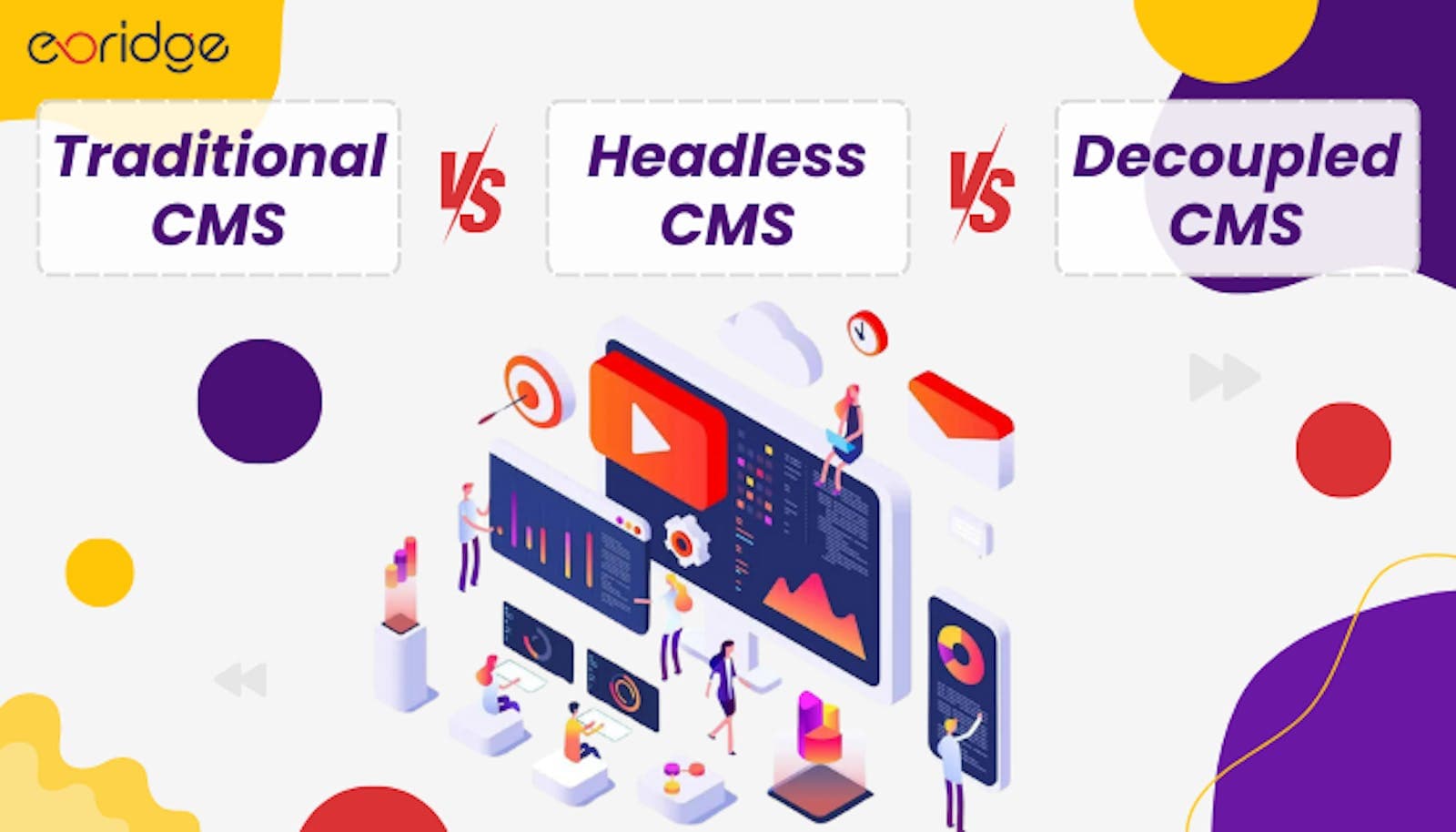
Top Headless CMS Statistics You Need to Know in 2024

Zarnish Khan
Dec 5, 2023 · 5 min read

With the popularity of content management systems (CMS), the rise of headless CMS has been nothing short of revolutionary.
As we step into 2024, businesses are increasingly adopting this decoupled approach to content management.
In this blog, we delve into the latest and most compelling statistics surrounding headless CMS, offering insights into its growth, impact, and the evolving landscape of digital content management.
What Exactly Is a Headless CMS?
Headless CMS, a revolutionary approach to content management, decouples the backend content repository from the frontend presentation layer.
Unlike traditional CMS architectures, headless CMS allows content creators to manage and organize digital content independently of the way it's displayed. This separation enhances flexibility, enabling businesses to deliver content seamlessly across various channels and devices.
Read more: What Is Headless CMS—Why Is It So Popular?
There are two primary types of headless CMS:
Decoupled CMS
This type maintains a connection between the backend and frontend, but the coupling is more relaxed compared to traditional CMS. Content is still managed independently, but the delivery and presentation layers can be more tightly integrated, offering a balance between flexibility and convenience.
Headless CMS
In this approach, the content repository is entirely divorced from the presentation layer, giving developers the freedom to use any technology for the front end. This flexibility is advantageous for creating dynamic, customized user interfaces tailored to specific platforms.
Common Examples of Headless CMS
Several notable examples of headless CMS have gained popularity for their flexibility and ability to cater to diverse business needs.
- One prominent example is Contentful, recognized for its developer-friendly interface and robust API-first approach, empowering users to create, manage, and distribute content seamlessly across various platforms.
- Another widely used headless CMS is Strapi, an open-source solution with customizable APIs, offering scalability and content management capabilities.
- Sanity stands out for its real-time collaboration features and structured content models, providing a dynamic platform for developers and content creators.
- Additionally, Prismic is acclaimed for its user-friendly interface and API-driven architecture, facilitating efficient content management and distribution.
These examples showcase the versatility of headless CMS in meeting the demands of modern, omnichannel digital experiences.
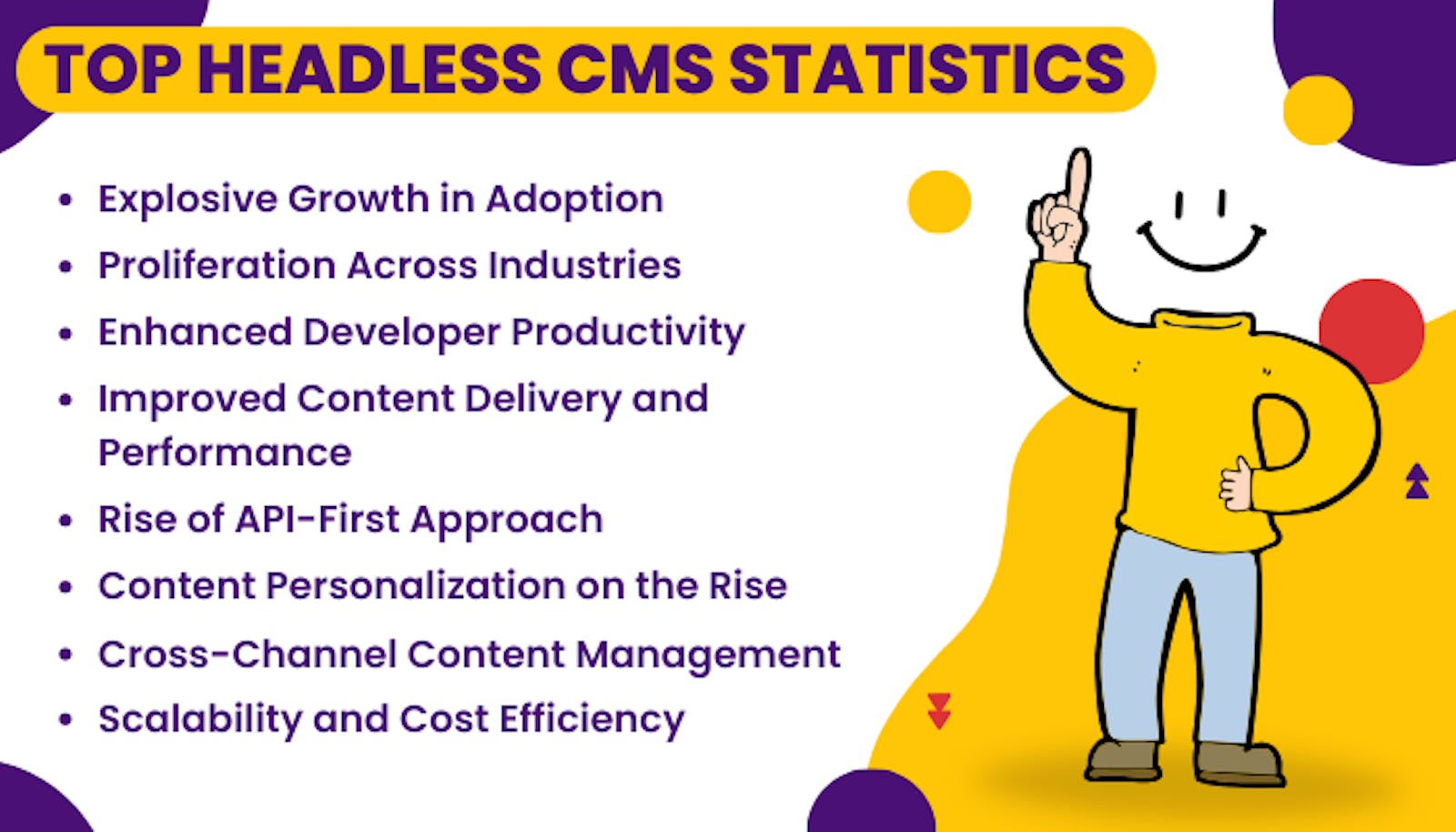
Top Headless CMS Statistics to Know
Explosive Growth in Adoption
The trajectory of headless CMS adoption has been nothing short of remarkable.
According to industry reports, the global headless CMS market is expected to grow at a CAGR of over 20% between 2022 and 2026.
This indicates a significant shift in how businesses approach content management, with more organizations recognizing the flexibility and agility offered by headless CMS architecture.
Proliferation Across Industries
Headless CMS is not confined to a specific industry; its appeal spans across various sectors. E-commerce, publishing, healthcare, and beyond—businesses in diverse fields are recognizing the need for a CMS that can seamlessly integrate with various front-end technologies.
As of 2024, more than 40% of e-commerce websites are expected to leverage headless CMS to deliver personalized and immersive digital experiences.
Enhanced Developer Productivity
One of the key drivers behind the surge in headless CMS adoption is its impact on developer productivity. With the separation of the backend and frontend, developers have the freedom to choose the most suitable technologies for each layer.
This has led to a reported 30% increase in development speed, empowering teams to create and deploy content-rich applications more efficiently.
Improved Content Delivery and Performance
Headless CMS empowers businesses to optimize content delivery across a multitude of channels. This flexibility allows for a seamless user experience on websites, mobile apps, IoT devices, and more.
Studies show that organizations leveraging headless CMS have experienced a 25% improvement in website loading times, contributing to better user engagement and satisfaction.
Read also: Should I Use Headless CMS? Used Cases, Pros and Cons
Rise of API-First Approach
In the headless CMS landscape, an API-first approach has become the norm.
Over 60% of businesses adopting headless CMS prioritize API-first architecture, enabling them to deliver content to any device or platform through well-defined APIs.
This approach not only future-proofs digital experiences but also allows for quick adaptation to emerging technologies.
Content Personalization on the Rise
Personalization is at the forefront of digital experiences, and headless CMS plays a pivotal role in enabling businesses to deliver tailored content.
Statistics reveal that organizations implementing headless CMS have witnessed a 35% increase in user engagement through personalized content strategies.
This capability proves invaluable in capturing and retaining the attention of today's discerning digital consumers.
Cross-Channel Content Management
The ability to manage content seamlessly across multiple channels is a hallmark of headless CMS.
Over 70% of businesses leveraging headless architecture report an improvement in their ability to maintain consistent branding and messaging across diverse digital touchpoints.
This cross-channel consistency is essential in creating a cohesive brand identity in an increasingly omnichannel landscape.
Scalability and Cost Efficiency
Scalability is a critical consideration for businesses anticipating growth. Headless CMS, with its modular and scalable architecture, meets this demand effectively.
Reports indicate that organizations adopting headless CMS have seen a 20% reduction in infrastructure costs, thanks to the ability to scale resources based on specific needs without the constraints of a monolithic CMS.
Read also: Why Should We Use Next.js with Headless CMS In Web Development?
The Bottom Line
As we venture further into 2024, the statistics surrounding headless CMS underscore its transformative impact on digital content management.
From its widespread adoption and industry-spanning relevance to its role in enhancing developer productivity and enabling personalized, cross-channel experiences, headless CMS is reshaping the way businesses approach content creation and delivery.
Keeping abreast of these key statistics is crucial for businesses aiming to stay at the forefront of digital innovation and provide unparalleled experiences to their audience