What Is Web Hosting? Types, Features and Benefits
ebridge
Jan 2, 2023 · 25 min read
Do you wish to discover website hosting? You can create any website with self-hosted website builders, such as WordPress.
The difficulty is that most newcomers are unaware of the ideal web hosting setup.
Many people even think that hosting one's website calls for specialized technical knowledge.
That is untrue!
You may host your website in minutes if you take the proper steps. Most of the time, it is as simple as setting up a Facebook account.
In this beginner's guide, we'll outline what web hosting is, its types, features and benefits, and the procedures necessary to host a website without acquiring any technical knowledge.
This will give you a fundamental understanding of the various website hosting options.
So, let’s get started.
What Is Web Hosting?
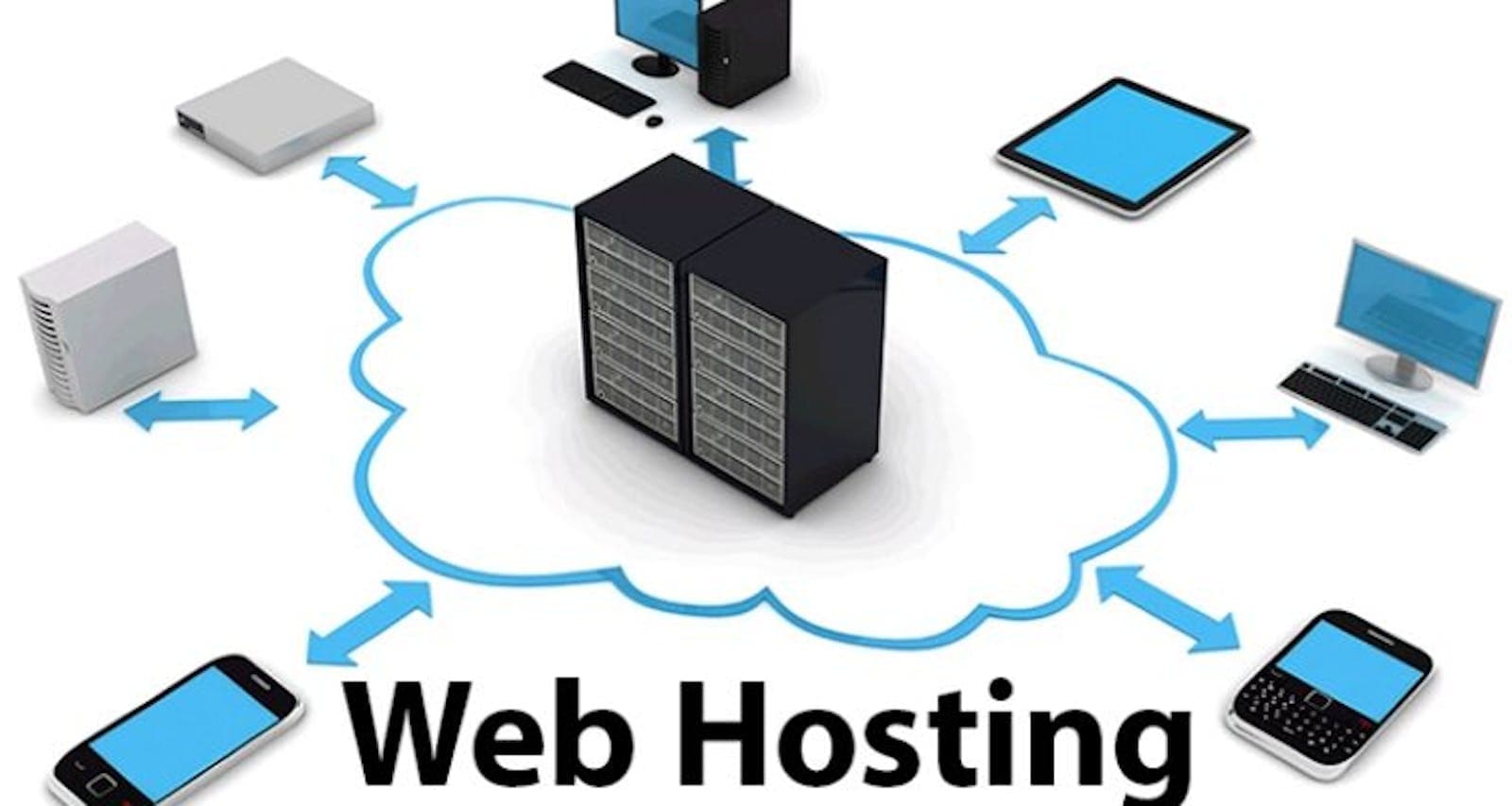
Businesses that operate and maintain the physical servers that all websites reside on are known as web hosts.
Even though we often refer to the internet as existing in the ether by using terms like "cyberspace" and "the cloud," the internet also has a physical presence.
Every website is composed of several software and file components.
When you visit a website, you typically only see the end product and don't give the parts any thought.
However, once you're in charge of the website, you realize how many components make up the entire.
Different Types of Web Hosting
Ideally, you ought to start with the most straightforward hosting option. You can upgrade to a more complex plan after your website receives more traffic.
To get a broad sense of the hosting options and their pricing, feel free to look at the hosting prices.
Let's look at some of the most well-known options.
- Cloud Hosting
Where things start to get a bit tricky is cloud hosting. Usually, when people use the term "cloud," they refer to dispersed VPSs.
This system operates by hosting a virtual server across a vast network of computers rather than just one.
The benefit of this strategy is that you can increase your server's resources with a network, which we refer to as the "cloud."
Due to the system's built-in redundancy, downtime and data loss are rarely problems with cloud hosting.
On paper, everything looks great, but cloud hosting isn't necessarily user-friendly for beginners.
For instance, many cloud hosting companies bill by the hour. A model, essentially a VPS, is "spun up," configured for your needs, and charges are accrued.
- Dedicated Hosting
Each website that uses dedicated hosting is given its physical server.
Choosing dedicated hosting allows you to configure the server, select your software and operating system, and tailor the entire hosting environment to your needs.
Having your on-site server is strong, but renting a dedicated server has the advantage of expert support from your web host.
Therefore, dedicated hosting is perfect for significant web enterprises that handle high traffic.
- Shared Hosting
This could be the most affordable hosting plan type.
Most providers will use this hosting as their entry-level offering if you seek free web hosting.
For website owners on a tight budget, free hosting may seem enticing, but it's vital to remember that you get what you pay for.
With shared hosting, your website will share a server with other websites, as the name implies.
While shared hosting plans can be an affordable method to launch a website quickly, it's vital to keep in mind that your website will compete with other websites on the server for resources.
This may result in slower speeds and more downtime during moments of heavy traffic.
Since you will be sharing a server with other websites, which may be exposed to hacking, security is another issue with shared hosting.
- WordPress Hosting
This kind of CMS web hosting service offers a server environment optimized for WordPress to speed up site loading and reduce potential problems.
However, websites built using this well-liked content management system can still use different types of web hosting (CMS).
The finest WordPress hosting packages typically include pre-installed themes, plugins for essential features like security and caching, and other tools.
- Virtual Private Server (VPS) Hosting
Virtual private servers (VPSs) surpass shared plans regarding performance and customizability.
A VPS functions by having numerous virtually partitioned parts on a single physical server. Every container, or VPS, is a complete system exclusive to your website.
As a result, you receive exclusive resources and, in some situations, access to the server's setup.
Although you still share the same physical server, VPSs offer a higher level of user separation. But doing so can improve security and performance.
Additionally, based on your hosting company, you might be able to customize your VPS to have the resources you require entirely.
How to Install a Web Host on Your Website
The procedures to set up your website with a web host are listed below.
Purchase a domain
Any website must have a name. Therefore, registering a domain name for your future website is the first step.
Users can find the website on the Internet using its name as its permanent address.
Choose a hosting company and a hosting package.
You should consider selecting a reputable hosting company when purchasing a domain name.
With hosting services, you can eventually make your website accessible to everyone by hosting it on the provider's server.
Select a hosting package
A crucial step in hosting your website is selecting the hosting. The five primary categories of hosting services are shared, managed WordPress, virtual private server (VPS), dedicated server, and reseller.
According to the tasks you intend to complete, select a hosting. Shared Hosting is the most excellent option to begin your journey for tiny personal blogs, business card websites, freelance portfolios, and smaller-sized organizations.
Online retailers, digital service companies, and heavily trafficked information sites may find VPS and Dedicated Servers good alternatives.
These designs provide a high degree of control and guarantee that computing resources are assigned solely to a customer's requirements.
Web Hosting Features
A few critical elements should be included in any web hosting plan, but many also offer other services and tools that help you set up your website more quickly and easily.
The following perks are some to keep an eye out for:
- A website builder with templates so you can quickly and easily create a site with a professional appearance.
- Unlimited email hosting, allowing you to give yourself and your staff professional email accounts.
- Domain registration enables you to maintain a single account for your domain and web hosting.
- Video and textual instructions to address all of your specific inquiries.
- 24/7 live support so you can work on your website whenever and get assistance if necessary.
- Shopping cart features to assist you in beginning an online business.
- Spam filters—who wants spam, anyway?
- Services for registering domains with WHOIS privacy.
- Regular site backups to safeguard your files as your website develops and expands.
Conclusion
Web hosting has several other advantages outside only assisting you in launching your website on the internet.
Hopefully, you now have a clearer idea of how picking a top-notch hosting company will allow you to benefit from these.
Remember that the hosting plan you choose should be the one that best suits the requirements of your website at the time. You can always change packages or eventually upgrade your hosting.